Comment les entreprises globalisées peuvent retrouver leur vitalité en redonnant une identité au terrain
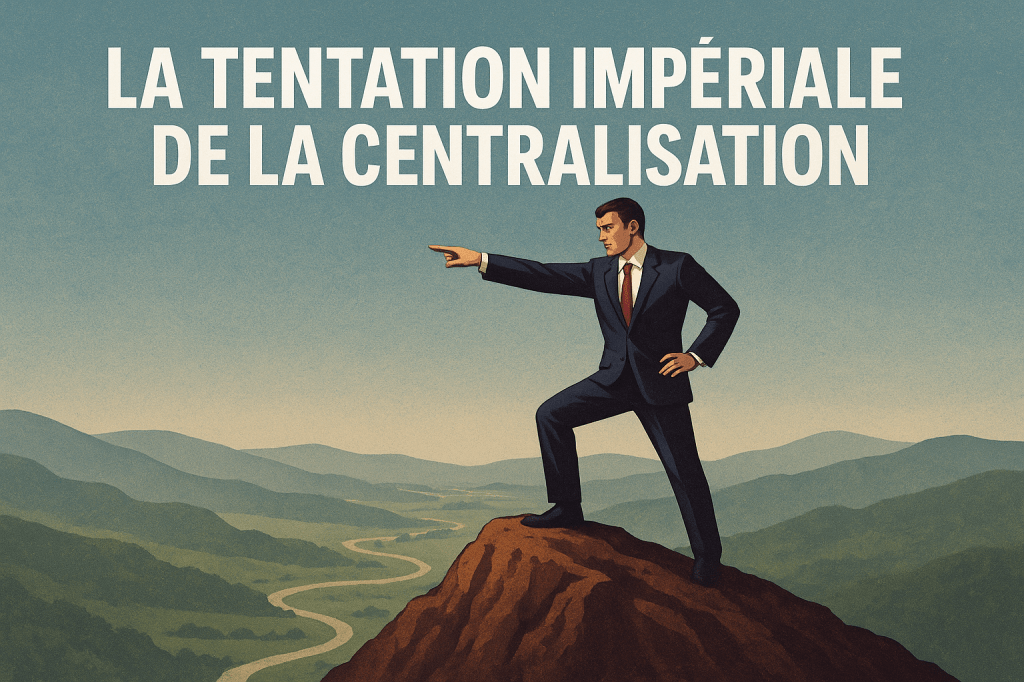
L’histoire nous enseigne que les civilisations meurent rarement d’un choc extérieur : elles s’éteignent de l’intérieur, lorsqu’elles perdent le lien entre leur centre et leurs marges, entre leur culture et leur identité.
Ce qui s’est produit à l’échelle des empires semble aujourd’hui se reproduire dans le monde industriel.
La mondialisation, censée ouvrir les marchés et fluidifier les échanges, a parfois eu un effet paradoxal : elle a uniformisé, dévitalisé, et conduit de nombreuses organisations à perdre le sens de ce qu’elles étaient.
Des racines fortes : quand l’entreprise incarnait un projet collectif
Les grandes entreprises industrielles européennes ont souvent commencé comme des aventures profondément humaines et locales.
Chez Pierre Fabre, Servier ou UCB, des entreprises que je connais bien et admire, ou dans d’autres maisons fondatrices de l’industrie moderne, chaque site, chaque usine, portait une identité propre, une fierté d’appartenance, une relation directe avec son fondateur.
Les décisions étaient proches du terrain, les collaborateurs comprenaient leur contribution au projet collectif, et le sentiment de “faire partie de quelque chose” alimentait la motivation et la performance.
Cette phase correspond à ce que les historiens appellent l’âge d’or d’une civilisation : celle où la vision, la cohérence et la vitalité s’équilibrent.
La globalisation : de la cohérence à la déconnexion
Avec la chute du Mur de Berlin et l’expansion des marchés mondiaux, les entreprises ont naturellement cherché à se structurer pour affronter la complexité du global.
De nombreux sièges se sont alors centralisés, les fonctions se sont rationalisées, les outils se sont standardisés.
Sur le papier, c’était pour beaucoup la promesse d’une meilleure efficience.
Mais à mesure que le pouvoir de décision se concentrait au centre, le terrain dans ces entreprises ultra centralisées s’est progressivement vidé de son autonomie et de son sens.
Les usines, autrefois perçues comme des “entités vivantes” dotées d’un rôle stratégique, sont devenues des numéros dans une organisation mondiale, avec des marges de manœuvre réduites et une identité effacée.
Ce glissement n’a rien d’anecdotique : il marque le passage d’une organisation “incarnée” à une organisation “abstraite”. Et c’est souvent à ce moment-là que commence le déclin.
Les symptômes du déclin : perte d’engagement, bureaucratisation et désincarnation
Les organisations ne meurent pas de manque de stratégie, mais de manque de sens.
Quand les équipes ne se sentent plus reconnues, quand l’usine devient un centre de coûts, quand les décisions se prennent loin de ceux qui produisent, la désimplication s’installe.
L’énergie collective se dissout dans la complexité administrative.
La performance opérationnelle devient mécanique, déconnectée de la motivation humaine.
Les indicateurs remplacent la vision. Et, comme dans les civilisations en fin de cycle, l’organisation se fige.
Réapprendre à vivre : la renaissance par le local
Pour retrouver de la vitalité, les entreprises globalisées doivent réinventer leur rapport au terrain.
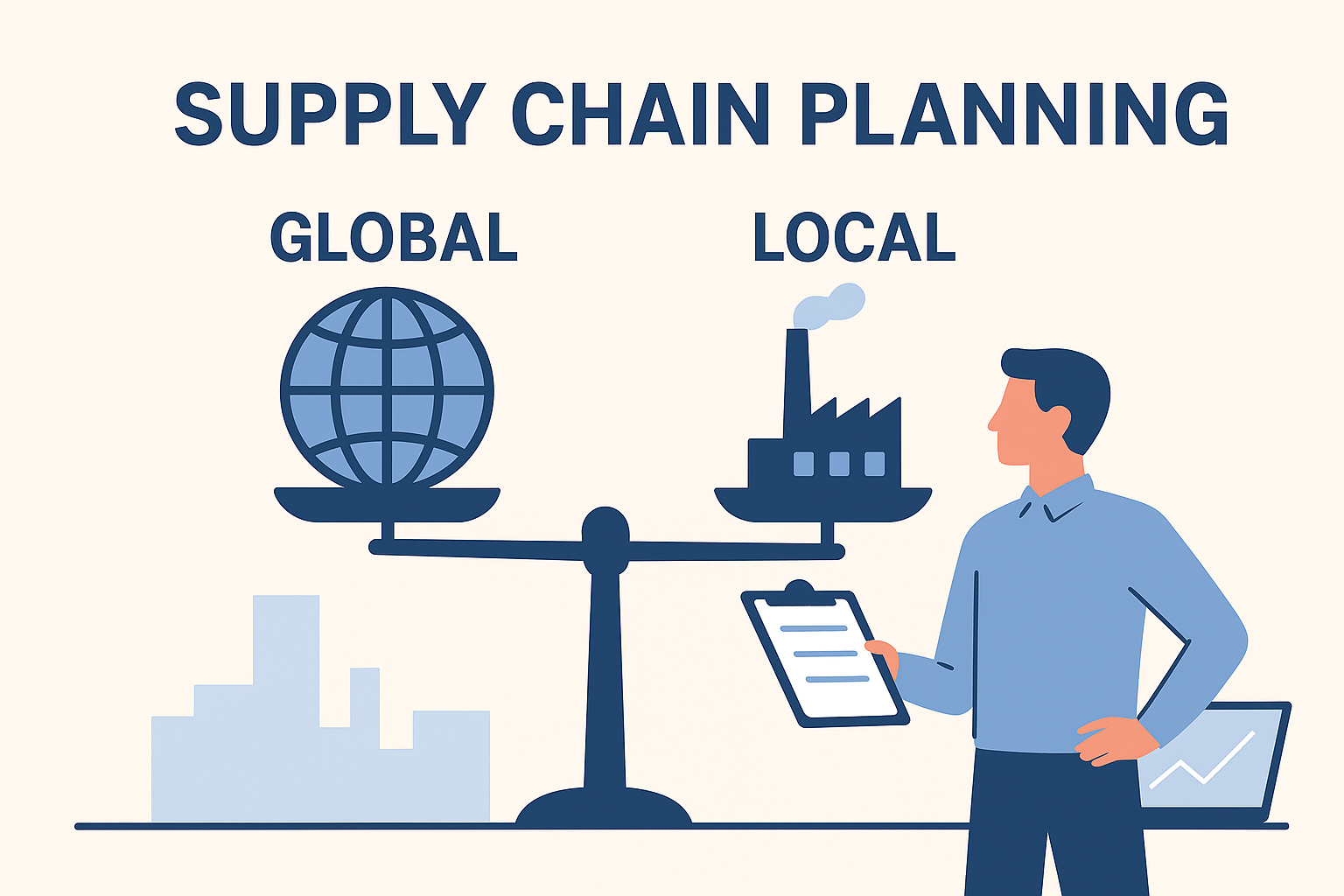
Cela ne signifie pas revenir à un modèle paternaliste ou fragmenté, mais réconcilier le global et le local.
Le global donne la direction, la cohérence, la culture commune.
Mais le local doit retrouver le droit à l’expérimentation, à la décision, à l’incarnation du projet.
Chaque usine, chaque site industriel, devrait être considéré non comme un maillon interchangeable, mais comme un centre de valeur, porteur de savoir-faire, d’initiative et de sens.
C’est ce qu’on pourrait appeler le nouveau contrat industriel : un équilibre entre la puissance du réseau global et la vitalité des racines locales.
Vers un humanisme industriel
Le XXIᵉ siècle sera celui des entreprises vivantes ou ne sera pas.
Les organisations capables de durer ne seront ni les plus centralisées ni les plus décentralisées, mais celles qui sauront combiner identité, autonomie et cohérence.
L’avenir appartient aux entreprises qui redonneront une âme à leurs territoires, une voix à leurs usines, et un sens à leur globalisation.
Car la véritable performance industrielle n’est pas seulement dans l’efficacité des systèmes : elle réside dans la vitalité des hommes et des lieux qui la font vivre.
Dans un contexte de globalisation et de pression sur les coûts, de nombreuses entreprises ont cherché à se recentrer sur leurs activités dites “à forte valeur ajoutée” en externalisant la production. Ce modèle, incarné par la “fabless company”, visait une organisation plus légère, plus flexible, et supposément plus performante.
Pourtant, les faits démontrent que la détention et la maîtrise des actifs industriels demeurent un facteur clé de différenciation et un avantage compétitif durable.
1. La maîtrise industrielle comme socle de compétence
Posséder ses usines, c’est conserver la maîtrise du savoir-faire, des procédés et des compétences critiques.
La production n’est pas une simple exécution : elle constitue un réservoir de connaissances tacites qui nourrit l’innovation, la qualité et l’amélioration continue.
Une entreprise qui perd cette maîtrise perd également la capacité d’arbitrer en connaissance de cause sur ses choix techniques et économiques.
2. L’innovation ancrée dans le terrain
Les innovations les plus durables émergent souvent au croisement entre ingénierie, production et qualité.
Les sites internes sont des laboratoires vivants, où la proximité entre conception et exécution accélère l’expérimentation et l’industrialisation.
L’externalisation, au contraire, crée une distance qui freine la boucle d’apprentissage et l’agilité.
3. La résilience opérationnelle et la souveraineté industrielle
Dans un environnement volatil — tensions géopolitiques, ruptures d’approvisionnement, exigences réglementaires — la capacité à contrôler ses moyens de production devient un enjeu de résilience.
Les entreprises intégrées sont mieux positionnées pour réagir rapidement, sécuriser leurs flux et préserver la continuité de leurs opérations.
4. Une culture d’entreprise enracinée dans la réalité industrielle
Au-delà des aspects économiques, les sites internes incarnent une culture, un engagement collectif et un sens du produit.
Cette culture industrielle, difficilement transférable, constitue un actif immatériel majeur et un élément clé de la performance durable.
Dans l’industrie pharmaceutique, comme ailleurs, l’OTIF est devenu le mot d’ordre. On le brandit comme le symbole ultime de la performance.
Mais à force de le répéter, il finit par masquer ce qu’il ne mesure pas : la réalité industrielle, la qualité du service, et la nature même du lien que nous entretenons avec ceux qui produisent pour nous.
L’OTIF : un indicateur nécessaire, mais pas suffisant
Soyons clairs : l’OTIF reste un indicateur utile. Il reflète la fiabilité d’un processus, la capacité à livrer dans les temps et dans les quantités prévues.
Mais il ne dit rien du service réellement rendu au client, ni de la valeur créée par la maîtrise industrielle.
Appliqué à un sous-traitant, il a tout son sens : j’attends de lui qu’il tienne ses engagements, qu’il livre « On Time In Full », et que, combiné à un indicateur de service client, cela traduise sa qualité de partenariat.
Autrement dit : pour un partenaire externe, OTIF + Service Client me suffisent. Ce sont des indicateurs de fiabilité contractuelle et de performance relationnelle.
Mais pour une usine interne, c’est une tout autre histoire
En revanche, s’agissant de nos propres usines, l’ambition ne peut pas s’arrêter là.
Je n’attends pas d’elles la simple conformité d’un flux logistique — j’attends plus :
une fiabilité structurelle, car la maîtrise du processus est entre nos mains ;
une flexibilité accrue, capable d’absorber la variabilité de la demande ou d’un marché tendu ;
une réactivité supérieure, car la proximité organisationnelle doit permettre un ajustement quasi instantané ;
et surtout, une intelligence industrielle, cette capacité à anticiper, proposer et innover, qu’aucun sous-traitant, aussi performant soit-il, ne pourra totalement reproduire.
En d’autres termes, nos usines ne sont pas des fournisseurs. Elles sont une extension de notre responsabilité industrielle et de notre promesse client.
La tentation de l’égalitarisme industriel
Assimiler une usine interne à un sous-traitant sous prétexte de symétrie d’indicateurs, c’est commettre une erreur de pilotage.
C’est oublier qu’une usine propre est un centre de savoir-faire, un levier de souveraineté, et souvent un amortisseur stratégique face aux crises d’approvisionnement.
C’est aussi risquer de reproduire les illusions du début des années 2000, quand certains rêvaient d’entreprises « sans usines » — on sait où cela a conduit.
Replacer le service au cœur de la mesure
Le service au client doit redevenir le fil conducteur :
pour un sous-traitant, il s’évalue à travers la fiabilité du contrat (OTIF + Service Client) ;
pour une usine interne, il s’apprécie à travers la capacité à servir, à s’adapter, à sécuriser et à progresser.
Confondre les deux, c’est se condamner à piloter sur des moyennes qui ne disent rien de l’essentiel.
Le rôle d’un indicateur n’est pas d’uniformiser la réalité, mais de l’éclairer.
Conclusion
L’OTIF n’est pas à jeter — il faut simplement le remettre à sa place : celle d’un indicateur de processus, pas d’un indicateur de stratégie.
Je me contenterai volontiers d’un bon OTIF assorti d’un bon niveau de service pour un sous-traitant.
Mais pour mes propres usines, j’en attends davantage : de la fiabilité, de la souplesse, de la réactivité, et cette part d’intelligence opérationnelle qui fait la différence entre un fournisseur et un pilier industriel.
In the pharmaceutical industry, centralizing supply chain planning functions has gradually become the standard. The goal seemed clear: harmonize processes, improve end-to-end visibility, and enable more coherent capacity decisions on a global scale. This approach has indeed brought real benefits in terms of strategic oversight and coordination between markets and production.
Yet behind this apparent success lies a deeper imbalance. By transferring most planning responsibilities to global entities, local planning functions—particularly at the factory level—have gradually been stripped of their substance. Their role, once central to operational control on site, is often reduced to executing plans decided elsewhere. This gradual shift has led to a loss of autonomy, purpose, and sometimes industrial performance.
How can this trend be reversed?
The Paradox of Centralization
A supply chain can only perform well if each of its links does. Behind every global plan lies a complex industrial reality, full of constraints, uncertainties, and daily trade-offs. Planning truly proves its value on the factory floor, where adaptation and local optimization happen. A strategy only matters if it can be executed rigorously and responsively—directly depending on the skills and autonomy of local teams.
The most advanced organizations understand this: global performance is not built against the field but with it. Global Planning sets the direction, prioritizes, and arbitrates. Local Planning translates this vision into action, optimizing resources and managing performance in close alignment with real-world constraints.
The Critical Role of Local Planning
Revaluing local planning functions means acknowledging their decisive role in supply chain reliability. Local planners ensure stable production plans, anticipate deviations, and adjust sequences according to actual capacity.
They also guarantee continuity of supply to markets and, consequently, the quality of service delivered to customers. In this context, the most relevant metrics are not only internal: Service Level to Customers, days of stockouts, and product availability reflect actual performance far better than OTIF alone, which is often perceived as a logistics metric disconnected from the customer experience.
Restoring Meaning to local Planning
Putting factory planners back at the center restores purpose to planning itself. These are experts of industrial reality, professionals capable of turning a global vision into reliable execution.
Reestablishing the role of local planning begins with clarifying responsibilities and improving the complementarity between global and local teams. Globally, priorities lie in coordination, strategic alignment, and capacity arbitration between sites. Locally, planning focuses on execution optimization, fine-tuned constraint management, and short- to medium-term control.
For this complementarity to work, a bi-directional model is essential: local teams don’t just execute global decisions—they feed global planning with reliable data, highlight constraints, and propose trade-offs. Regular feedback loops—such as weekly reviews of local constraints with Global Planning—turn these interactions into real performance levers.
At the same time, it is crucial to build a rewarding career path for local planners. Clear career progression enables them to evolve into recognized expert roles, such as “Site Planning Master” or “Local Supply Chain Optimization Lead.”
Creating a cross-functional network of planning experts, visible and valued alongside global functions, further reinforces their recognition. Finally, highlighting local gains achieved through optimization initiatives—Lean Planning, automation, simulations—demonstrates the strategic impact of these teams on overall performance.
Global Excellence Starts in the factories
Global excellence is not commanded from headquarters. It is built every day—on the shop floor, in planning offices, close to operations. Local planners are the discreet artisans of this excellence: embodying rigor, responsiveness, and resilience that distinguish a well-managed supply chain from a truly high-performing one.
By placing local planning at the heart of operations, companies strengthen agility, coherence, and their ability to respond effectively to market needs.
It is in this alliance between global vision and local excellence that the true competitiveness of the supply chain is decided.
How are you empowering local planning functions in your organization?
Dans l’industrie pharmaceutique, la centralisation des fonctions de planification de la Supply Chain s’est imposée au fil des années comme une évidence. L’objectif semblait clair : harmoniser les processus, améliorer la visibilité de bout en bout et permettre des arbitrages capacitaires plus cohérents à l’échelle mondiale. Cette logique a apporté de réels bénéfices en matière de pilotage stratégique et de coordination entre marchés et production.
Mais derrière cette réussite apparente se cache un déséquilibre profond. En transférant la majeure partie des responsabilités de planification vers les entités globales, on a peu à peu vidé de leur substance les fonctions locales, notamment celles des planificateurs d’usine.
Leur rôle, autrefois central dans la maîtrise opérationnelle du site, s’est souvent réduit à l’exécution de plans décidés ailleurs. Ce glissement progressif a conduit à une perte d’autonomie, de sens et parfois de performance industrielle.
Comment donc renverser cette tendance ?
Le paradoxe de la centralisation
Une Supply Chain ne peut être performante que si chacun de ses maillons l’est aussi. Derrière chaque plan global se cache une réalité industrielle complexe, faite de contraintes, d’aléas et d’arbitrages quotidiens. C’est dans les usines que la planification prend toute sa valeur : celle de l’adaptation et de l’optimisation locale. Une stratégie n’a de valeur que si elle peut être exécutée avec rigueur et réactivité, et cela dépend directement de la compétence et de l’autonomie des équipes locales.
Les organisations les plus avancées l’ont bien compris : la performance globale ne se construit pas contre le terrain, mais avec lui. Le Global Planning définit la direction, priorise et arbitre. Le Local Planning, lui, traduit cette vision en action, en optimisant les ressources et en pilotant les performances au plus près des contraintes réelles.
Le rôle décisif du planning local
Revaloriser les fonctions de planning local, c’est reconnaître qu’elles jouent un rôle décisif dans la fiabilité de la Supply Chain. Ce sont elles qui garantissent la stabilité des plans de production, anticipent les dérives et ajustent les séquences en fonction des capacités réelles.
Ce sont aussi elles qui assurent la continuité d’approvisionnement sur les marchés et, par conséquent, la qualité du service rendu aux clients. Dans ce cadre, les indicateurs les plus pertinents ne sont pas seulement internes : le Service Level to Customers, le nombre de jours de rupture ou encore la disponibilité produit mesurent bien mieux la performance réelle que le seul OTIF, trop souvent perçu comme un indicateur logistique déconnecté du ressenti client.
Redonner du sens à la planification : quel plan pour revaloriser les fonctions locale
Redonner toute leur place aux planificateurs d’usine, c’est redonner du sens à la planification elle-même. Ce sont des experts de la réalité industrielle, des professionnels capables de transformer une vision globale en exécution fiable.
Redonner toute sa place aux fonctions de planning local commence par une clarification des rôles et une meilleure complémentarité entre les équipes globales et locales. Au niveau global, la priorité est la coordination, l’alignement stratégique et l’arbitrage capacitaire entre sites. Le planning local, quant à lui, se concentre sur l’optimisation de l’exécution, la maîtrise fine des contraintes et le pilotage à court et moyen terme.
Pour que cette complémentarité fonctionne, il est essentiel d’adopter un modèle bi-directionnel: le local ne se limite pas à exécuter les décisions globales, il fournit au global des données fiables, signale les contraintes et propose des arbitrages. L’instauration d’un “feedback loop” régulier – par exemple à travers une revue hebdomadaire des contraintes locales avec le Global Planning – permet de transformer ces échanges en véritable levier de performance.
Parallèlement, il est crucial de reconstruire une filière de carrière valorisante pour les planificateurs locaux. Cela passe par la définition d’un parcours de carrière clair, offrant la possibilité d’évoluer vers des postes d’experts reconnus, tels que “Site Planning Master” ou “Local Supply Chain Optimization Lead”.
La création d’un réseau transverse d’experts planning, visible et valorisé comme les fonctions globales, contribue également à renforcer leur reconnaissance.
Enfin, mettre en avant les gains obtenus localement grâce à des initiatives d’optimisation – Lean Planning, automatisation ou simulation – permet de montrer concrètement l’impact stratégique de ces équipes sur la performance globale.
L’excellence globale naît du terrain
L’excellence globale ne se décrète pas depuis un siège. Elle se construit, chaque jour, dans les ateliers, dans les bureaux de planning, dans la proximité avec les opérations. Les planificateurs locaux en sont les artisans discrets : ils incarnent la rigueur, la réactivité et la résilience qui font la différence entre une Supply Chain bien pilotée et une Supply Chain réellement performante.
En replaçant le planning local au cœur du dispositif, les entreprises renforcent leur agilité, leur cohérence et leur capacité à répondre efficacement aux besoins du marché. C’est là, dans cette alliance entre vision globale et excellence locale, que se joue la véritable compétitivité de la Supply Chain.
Et vous, comment valorisez-vous les fonctions de planning local dans votre organisation ? #SupplyChain #Pharma #Planning #Leadership #OperationalExcellence
Why do so many Supply Chain experts persistently focus on the OTIF performance indicator — On Time In Full — whether to assess a subcontractor, a supplier, or even their own plant? Because OTIF is seductive. It reassures. It offers the illusion of simplicity, a single truth, and total control. At first glance, it seems to represent the promise of a satisfied customer: deliver on time, deliver the right quantity, deliver what was ordered. The industrial dream summed up in four letters. The real key indicator of any Supply Chain’s health, however, remains the level of Service to the Customers who keep us alive.
You can easily spot the OTIF believers. They speak in percentages, swear by their dashboards, and treat any deviation from target as a mortal sin. The world around them may be falling apart — shortages, overstocks, runaway costs, exasperated customers — it doesn’t matter: as long as the OTIF looks good, everything’s fine.
Yet OTIF is nothing more than the GPS of the blind — version 4.0 of magical thinking. We stop trying to understand the system; we just rate it. We no longer manage the flow; we evaluate it. We follow the voice of the GPS, even when we’re clearly getting lost.
Behind the apparent simplicity of OTIF lies a worrying intellectual poverty. Relying only on that indicator means confusing consequence with cause, result with control, measurement with understanding.
True Supply Chain professionals know that OTIF is just a thermometer. The performance of a supply network, a factory, or a major CMO cannot be reduced to delivery punctuality. It lies in process robustness, variability control, flow synchronization, quality of decision-making, and the ability to respond intelligently to the unexpected.
But of course, measuring these dimensions requires discernment, method, and above all, a management culture based on causes rather than symptoms. It’s far less “sexy” than waving a percentage in an executive committee meeting.
In many companies, OTIF has become the fig leaf covering a deep misunderstanding of how Supply Chains actually work. It’s brandished like a totem, discussed religiously every month, yet rarely questioned for what it truly reveals. A 98% OTIF can easily conceal an organization under stress, bloated inventories, absurd trade-offs, and frustrated customers.
The ignorant will settle for it, as OTIF gives them the illusion of rigor. The others — those who truly understand Supply Chain — see it for what it is: a useful signal, yes, but only when read within a systemic framework, connected to indicators of reliability, flexibility, collaboration, and governance.
OTIF should never be a goal. It’s a symptom. And as long as we confuse fever with disease, the Supply Chain will remain a fragile mechanism observed from afar, rather than a living system we understand, nurture, and help grow.
Pourquoi tant d’experts en Supply Chain management se focalisent-ils maladroitement sur l’indicateur de performance OTIF — On Time In Full — que ce soit pour mesurer la performance d’un sous-traitant, d’un fournisseur ou même de leur propre usine ?
Parce que l’OTIF est séduisant. Il rassure. Il offre l’illusion d’un chiffre simple, d’une vérité unique et d’un contrôle total. À première vue, cet indicateur semble incarner la promesse du client satisfait : livrer à l’heure, livrer la bonne quantité, livrer ce qui a été commandé. Le rêve industriel résumé en quatre lettres. L’indicateur clé du bon fonctionnement d’une Supply Chain est et restera le Service aux Clients qui nous font vivre.
Les adeptes de l’OTIF se reconnaissent facilement. Ils parlent en pourcentages, ne jurent que par leurs dashboards, et considèrent tout écart à la cible comme un péché mortel. Le monde autour d’eux peut bien s’effondrer — ruptures, surstocks, coûts délirants, clients exaspérés — peu importe : l’OTIF est bon, donc tout va bien.
Pourtant, l’OTIF c’est le GPS des aveugles, c’est la version 4.0 de la pensée magique. On ne cherche plus à comprendre le système, on le note. On ne pilote plus le flux, on l’évalue. On suit la voix du GPS, même quand on commence à s’égarer.
Derrière ce vernis de simplicité qu’est l’OTIF, se cache en effet une pauvreté intellectuelle inquiétante. Car se limiter à cet indicateur, c’est confondre la conséquence avec la cause, le résultat avec la maîtrise, la mesure avec la compréhension.
Les vrais professionnels du Supply Chain management savent que l’OTIF n’est qu’un thermomètre. La performance d’un réseau d’approvisionnement, d’une usine ou d’un CMO important ne se réduit pas à la ponctualité de la livraison : elle réside dans la robustesse du processus, la maîtrise des variabilités, la synchronisation des flux, la qualité du pilotage décisionnel et la capacité à réagir intelligemment face à l’imprévu.
Mais voilà, mesurer ces dimensions demande du discernement, de la méthode, et surtout une culture du management par les causes plutôt que par les symptômes. C’est beaucoup moins “sexy” que d’agiter un pourcentage dans un comité de direction.
L’OTIF, dans bien des entreprises, est devenu le cache-misère d’une incompréhension profonde des mécanismes de la Supply Chain. On le brandit comme un totem, on le commente religieusement chaque mois, sans jamais interroger ce qu’il reflète vraiment. Or, un 98 % d’OTIF peut dissimuler une organisation sous tension, des stocks explosés, des arbitrages absurdes et des clients frustrés.
Les ignorants en Supply Chain s’en contenteront, car l’OTIF leur donnera une illusion de rigueur. Les autres, ceux qui en savent davantage, le regardent pour ce qu’il est : un signal utile, certes, mais seulement s’il s’inscrit dans une lecture systémique, relié à des indicateurs de fiabilité, de flexibilité, de collaboration et de pilotage.
L’OTIF ne peut jamais être un but. C’est un symptôme. Et tant qu’on confondra la fièvre avec la maladie, la Supply Chain restera gérée comme une mécanique fragile qu’on observe de loin, plutôt qu’un organisme vivant qu’on comprend et qu’on fait grandir.
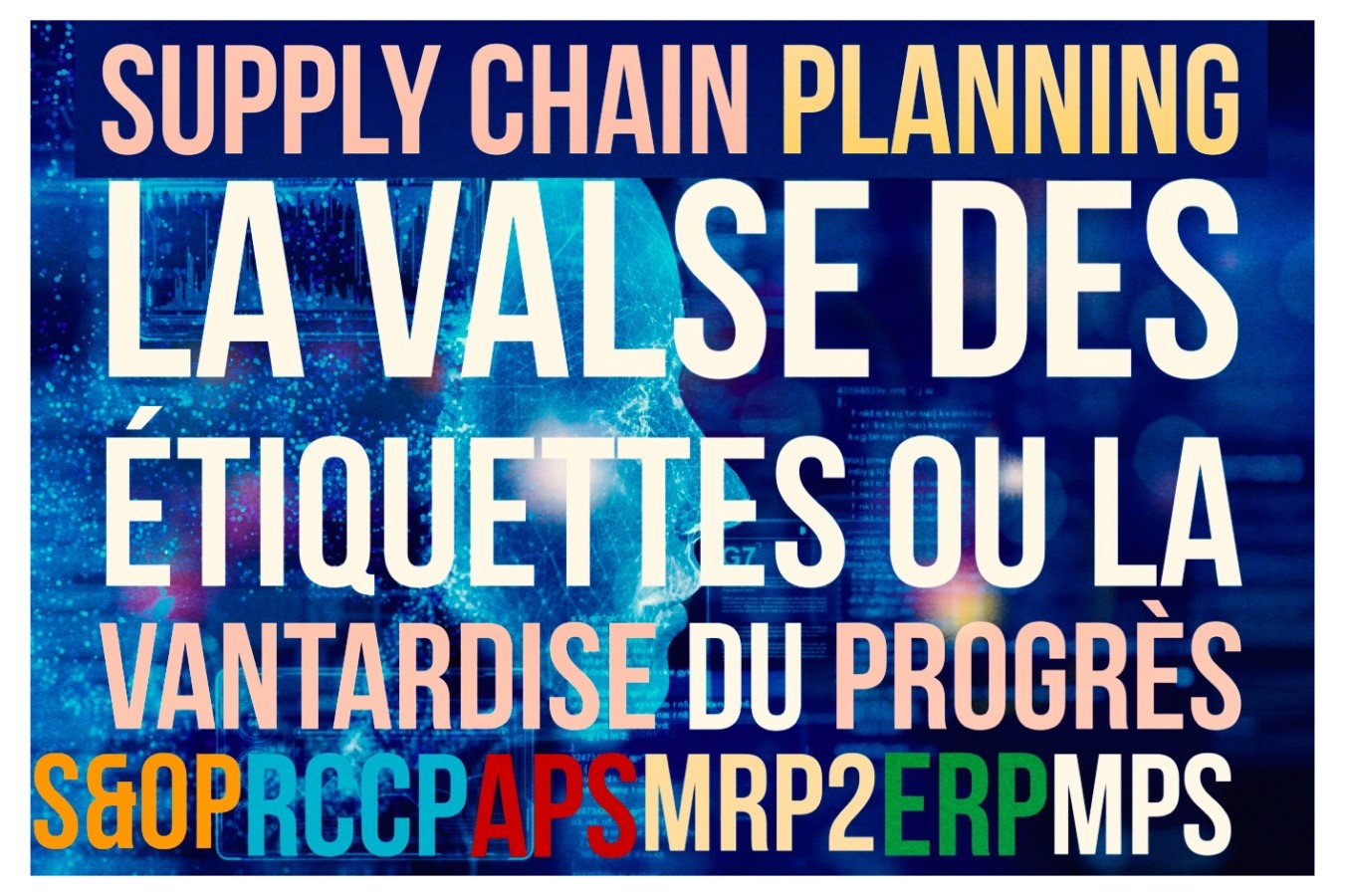
Qu’est-ce qui a vraiment changé dans le domaine de la planification industrielle ces 50 dernières années, sinon le fait que chaque avancée technologique et chaque élargissement du champ d’application, a donné lieu à de nouveaux acronymes et à des tentatives purement Commerciales et Marketing des entreprises de Conseil et de fournisseur de systèmes, visant à rendre « ringard » ce qui avait été fait auparavant.
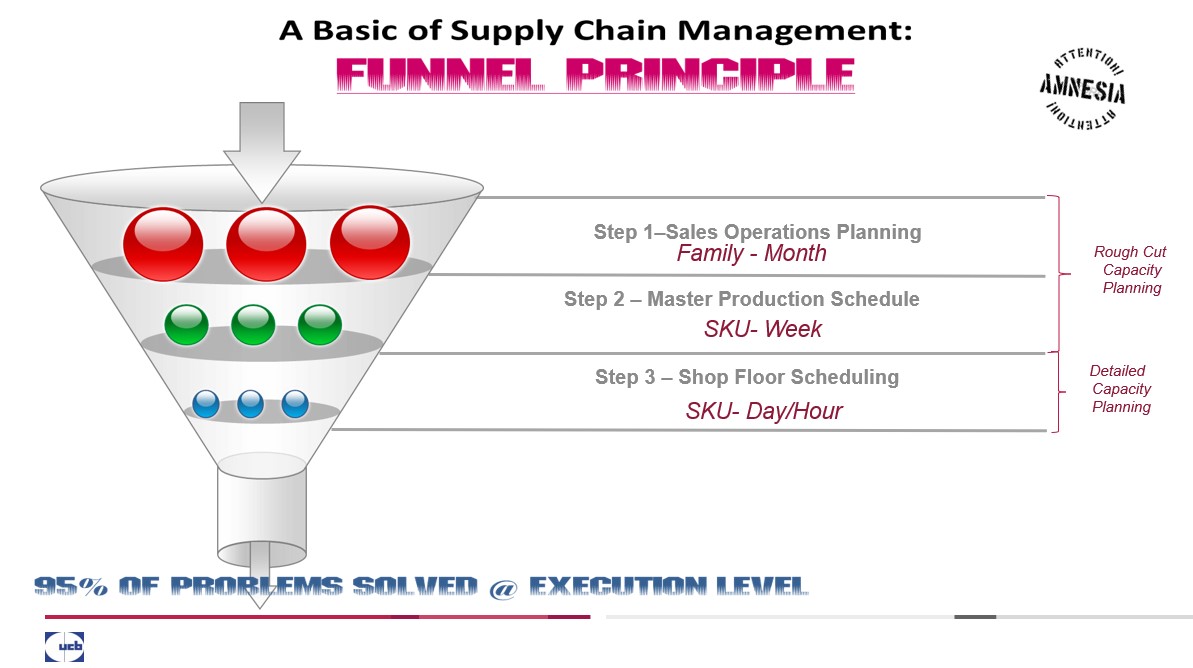
Cependant, quel que soit le système, rien ne pourra jamais remplacer la pertinence de l’approche en trois niveaux, ce que j’appelle la méthode de l’entonnoir (S&OP/RCCP, MPS, Shop Floor Scheduling) développée durant l’invention du principe MRP2. Ce qui rend le MRP2 si important et pénalise ceux qui sont attachés à l’histoire de la planification industrielle, c’est que cette abréviation de trois lettres représente à la fois un système de calcul informatique et une méthode de planification industrielle d’une logique infaillible.
L’intérêt de cette approche, déjà préconisée à l’époque, était de débuter par une analyse macroscopique approfondie de la demande à long terme ainsi que des possibilités du réseau industriel d’y répondre (S&OP). En prenant du recul grâce à cette vision globale de la chaîne d’approvisionnement, il était possible d’anticiper les problèmes majeurs et de prendre des décisions éclairées. Cette perspective panoramique locale ou globale de la chaîne d’approvisionnement a également permis aux entreprises, depuis cette époque lointaine, de réduire l’écart entre leur stratégie et leurs objectifs opérationnels quotidiens. Une véritable opportunité pour aligner les décisions quotidiennes avec les objectifs à long terme.
La logique nous dictait alors de nous concentrer sur un horizon plus restreint, à savoir le court et moyen terme, afin de planifier plus en détail les décisions prises lors du processus S&OP. Cette approche nous permet a ce stade de déjà prendre des engagements fermes envers nos clients. Pour ce faire, il essentiel de vérifier avec précision la disponibilité de nos capacités industrielles ainsi que des matières premières.
Vient enfin le temps de la préparation de l’exécution à très court terme, avec l’ordonnancement fin, l’allocation des matières voir du personnel sur les équipements.
En réalité ce qui a changé depuis 50 ans, est qu’après le système Mrp 2 au départ s’adressait à une composante seulement de l’entreprise, la planification de la production et des approvisionnements matières ; ce n’est que fin des années 90 qu’apparurent les ERP , et la prise en compte dans un même système de la totalité des composantes de l’entreprise. Que n’ai-je entendu à l’époque sur le triste destin du MRP2 et de sa puissante philosophie?
Puis vers la fin du XX ème siècle vint l’heure des APS, Systèmes de planification avancés qui bénéficiant de foudroyant progrès technologiques permettaient d’élargir le périmètre de la panification à une Supply Chain de plus en plus globale et étendue sur le territoire de la planète. La vitesse d’exécution et la puissance des “Solvers” offrirent ainsi de nouvelles possibilités insoupçonnées, mais était-ce là suffisant ? Sans l’intelligence d’une méthodologie approfondie pour analyser les milliers de données fournies par ces nouveaux engins, sans des protocoles de travail bien établis pour la prise de décisions et leur répercussion sur l’ensemble de la chaîne, la technologie ne sera jamais qu’un facteur d’instabilité supplémentaire.
Les mêmes stratèges de la communication et du Marketing dont il fut question en introduction ont à chaque pas en avant, cherché à dévaloriser les mots anciens , créant ainsi de nouveaux acronymes dont on a rapidement compris qu’ils ne faisaient qu’ajouter une couche superficielle de vernis, masquant avec peine le vieux principe déjà validé depuis de nombreuses années. Par exemple, le vieux S&OP du siècle dernier s’en est finalement assez bien sorti, même s’il a été partiellement éclipsé par l’BP ou d’autres abréviations.
Pure vantardise du progrès !!
En réalité, la véritable évolution de l’histoire du S&OP a résidé en l’extension de son champ d’application, passant d’un simple site à l’ensemble d’un réseau industriel et élargissant ses thèmes à des aspects plus financiers. Il est important de reconnaître de manière raisonnable que dans ce cas, le progrès technologique lié aux systèmes n’a fait que répondre aux besoins croissants du business et non l’inverse. C’est une évolution naturelle qui démontre l’adaptabilité de S&OP aux exigences de plus en plus complexes de l’industrie.
Le MPS quant à lui à davantage souffert et a souvent disparu derrière une « planification opérationnelle » sans que l’on ne sache très bien si elle couvre aussi l’ordonnancement a très court terme (SFS, Shop Floor Scheduling).
Qu’importe en fin de compte comment on l’appelle, il est crucial dans le domaine de la planification industrielle de pouvoir disposer d’une phase de mise en œuvre des décisions prises en S&OP, que ce soit en termes de demande ou d’approvisionnement. C’est donc l’heure, quel que soit le système utilisé, d’affiner notre vision des programmes de demande et d’approvisionnement à moyen et court terme, de les stabiliser afin de pouvoir prendre des engagements fermes envers nos clients, puis de gérer par exception les changements qui ne manqueront pas d’intervenir dans cette zone dite « ferme ».
En conclusion, je recommanderai vivement à tous les fervents de la “ringardisation” du passé, de plutôt mettre en valeur leur créativité et leur intelligence pour résoudre les problèmes qui entravent la chaîne d’approvisionnement, le service client, et les coûts de l’entreprise, plutôt que de s’engager dans cette bataille stérile d’une prétendue modernité dénuée d’intérêt fondamental.
SUPPLY CHAIN PLANNING THE GAME OF LABELS OR THE FALSE PROMISES OF PROGRESS
What has really changed in the area of industrial planning over the last 50 years, except the fact that every technological leapfrog and every extension of the Supply Chain scope has given birth to new acronyms and to purely commercial and marketing maneuvers by consultancy firms and systems vendors, with the only goal of outdating what had gone before..
However, whatever the system is , nothing will ever replace the relevance of the three-level approach, what I called yesterday the “funnel method” (S&OP/RCCP, MPS, Shop Floor Scheduling) developed during the invention of the MRP2 principle. What makes MRP2 so important, and what penalizes those who are attached to the history of industrial planning, is that this three-letter abbreviation represents both a computer calculation system, and an indestructible logical method of approaching industrial planning.
The advantage of this methodology at the time, was that it recommended to start with an in-depth macroscopic analysis of long-term demand, and the ability of the industrial network to meet it (S&OP). Taking a step back with this global view of the supply chain, made it possible to anticipate major problems and take appropriated decisions.
This local or global panoramic view of the supply chain has also enabled companies, since those distant days, to reduce the gap between their strategy and their day-to-day operational objectives. S&OP, a real opportunity to align day-to-day decisions with long-term objectives.
Logic dictated that we should in a next step, focus on a more limited timeframe, namely the short and medium term, so that we could integrate in the future execution plan, the decisions taken during the S&OP process. At this stage, this approach enables us to make firm commitments to the customers, after verification of the industrial capacity and the raw materials that are really available to make these promises.
Ultimately comes the time to plan for the very short-term execution, with fine-tuned scheduling, allocation of materials and even personnel on the equipment.
What has changed over the last 50 years is that the MRP2 system was initially aimed at just one component of the company, Production, and material supply planning; it wasn’t until the end of the 90s that ERP appeared, when all the company’s components started to be considered in the same system.
Apart from that, the learning from MRP2 certainly didn’t deserve “to be thrown out with the bathwater together with that baby”.
Then came the APS (Advanced Planning Systems) times, which thanks to extraordinary technological progress, have allowed the expansion of the Supply Chain scope to a much larger scale, every day more global. The speed of execution and power of the ‘Solvers’ offered unsuspected new possibilities, but was that enough?
Without the intelligence of a real operating method for analyzing the thousands of data supplied by these new machines, plus well-established working protocols for taking decisions and passing them on throughout the chain, technology will never be anything more than an accelerator of chaos.
The same communication and marketing strategists mentioned in the introduction have, at every step forward, tried to undermine the value of the old words and principles , creating new acronyms which soon appeared, as just superficial layer of varnish, barely masking the old principle which had already been successful for many years. For example, the old S&OP of the last century has finally survived quite well, even if it has been partially eclipsed by BP or other abbreviations.
False boasts about progress!
In fact, the real evolution in the history of S&OP has been the extension of its scope from a single site to an entire industrial network and the extension of its themes to more financial aspects. It is important to recognize in a reasonable way that in this case, the technological progress linked to the systems has simply responded to the growing needs of the business and not the other way round. This is a natural evolution which demonstrates the adaptability of S&OP to the increasingly complex requirements of industry.
The MPS, has suffered more, and has often disappeared behind ‘operational planning’ or other acronyms. I’ve even heard specialists telling me that it was completed out of date.
For my part, I am firmly convinced that there will always be a need in a planning cycle for a key phase during which, over a shorter timeframe and at a finer level of granularity, the planner will use the alerts from his system to confirm the feasibility of a plan that will enable firm commitments to be made to customers.
In conclusion, I would strongly recommend that all those who are keen to ‘old-fashionedise’ the past should preferably use their creativity and intelligence to solve the problems that are impeding the supply chain, customer service and business costs, rather than engaging us in this sterile battle of so-called modernity, which is without any fundamental interest.
Alliances, acquisitions, and mergers can often look like true battlefields, with employees openly or covertly revealing their heightened stress levels, distractions, and overall sense of confusion.
Even though top managers may present themselves with “Aqua Fresh” smiles on TV or in magazines, boasting about their clever strategies and imagined partnerships that promise maximum growth and profitability for shareholders, the reality within the new corporation is often far from easy.
As stock exchange value goes up, delighted by this new generation of head-cutters, situation in the field often looks more like the Bronx in New York.
According to a recent study conducted by A.T Kearney on a hundred companies that recently underwent a merger, 58% of these companies, either partially or completely, killed the existing values and assets (human and organizational assets), without gaining any form of capitalization. This emphasizes the potential negative impact that such mergers can have on the human and organizational aspects of a company.
Two-thirds of them have confidently acknowledged their inability to achieve their strategic objectives.
Frequently, the expected savings that have justified significant cost-cutting decisions never materialized or were only achieved superficially through large-scale restructuring based on factors like the number of employees or facilities. This often leads to chaos within the organization and later results in substantial indirect costs. There are several main reasons for the subsequent increase in costs after restructuring:
Best elements are leaving rapidly, creating confusion between survivals.
In the world of management, best “Politicians”, cleverly secure key positions for themselves and their inner circle through skilled lobbying, leaving the others in an unbearable state of expectation.
The reorganization process remains stucked in the “reconstruction” stage, leading to a persistent and chaotic situation that persists even after 2 or 3 years. This ongoing mess is causing significant challenges and inhibitions at lower levels.
Senior professionals are often dismissed, sacrificing their valuable expertise and knowledge, leaving behind them an empty shell.
The absence of a proactive approach to create a new corporate culture in the early stages, can inadvertently contribute to the persistence of antagonistic factions within the organization.
Desynchronisation of existing synergies between R&D, Manufacturing , Marketing…
Productivity of employees at the shop floor level can gradually declines as they become preoccupied with rumors circulating amongst them about their future.
So, what’s the verdict? Is losing your job after a merger or an acquisition a favorable outcome or a detrimental one?
Trying to retain your position within your current company, with unclear borders in your role, and a deteriorating work environment, may not always be the most favorable choice.
Think twice before taking any decision!
If you desire to adapt yourself and thrive in the changing landscape, while navigating through the unpredictability of this new era, you may find your inspiration in Ian Stewart’s enlightening masterpiece, “The New Science of Disorder”. Within its pages, you will discover valuable insights on embracing the confusing nature of chaos and uncertainty.
Alternatively, you could choose to collaborate with us, as we offer numerous methods to preserve and sharpen your skills without succumbing to disorder.
Emmanuel de Ryckel
PS: I wrote this text at the end of the 2000s when I was managing industrial operations at the Honeywell site in Amiens. I rewrote it today as an experiment using AI, which didn’t really convince me.






 TRANSITION MANAGEMENT IN SUPPLY CHAIN