In the pharmaceutical industry, centralizing supply chain planning functions has gradually become the standard. The goal seemed clear: harmonize processes, improve end-to-end visibility, and enable more coherent capacity decisions on a global scale. This approach has indeed brought real benefits in terms of strategic oversight and coordination between markets and production.
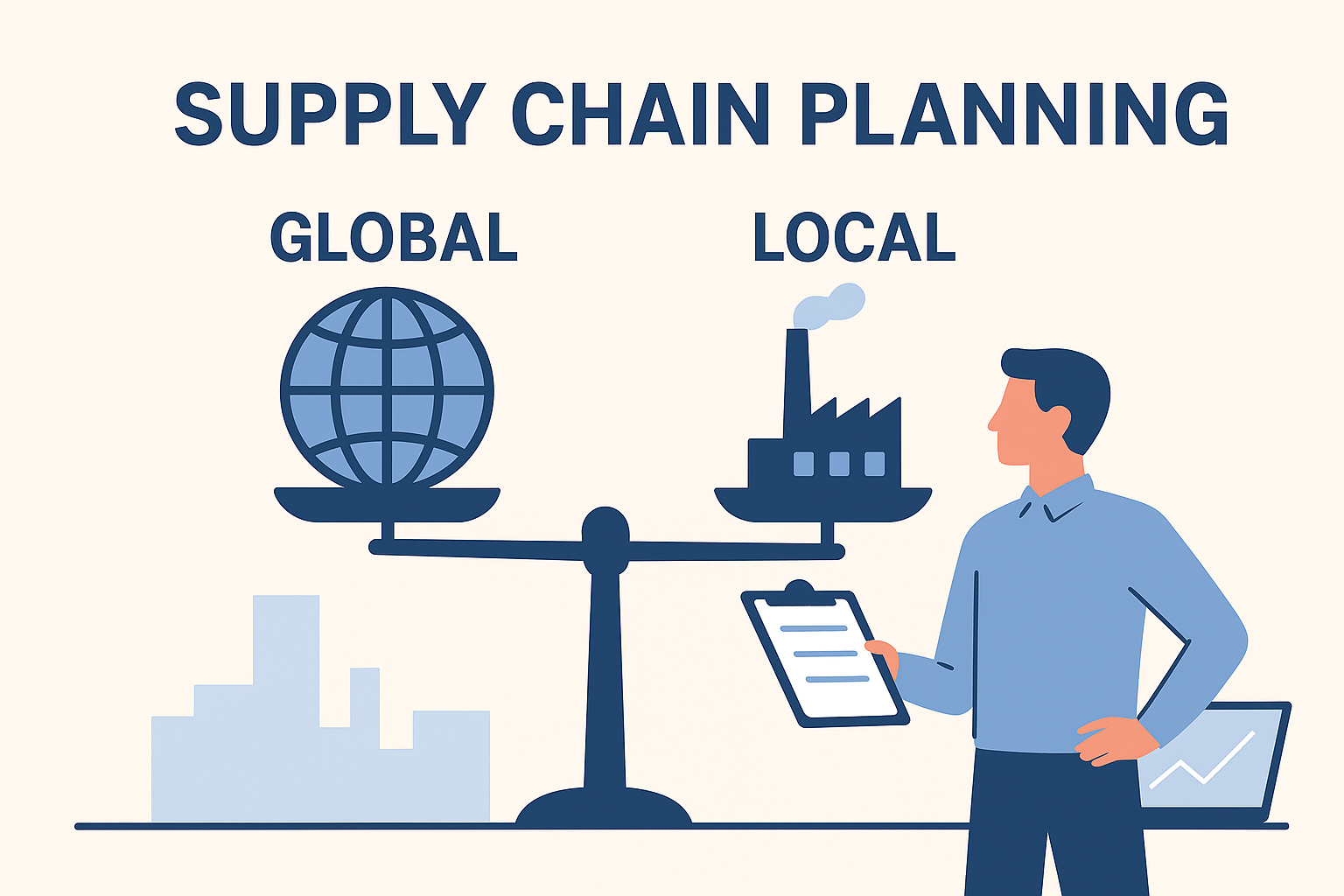
Yet behind this apparent success lies a deeper imbalance. By transferring most planning responsibilities to global entities, local planning functions—particularly at the factory level—have gradually been stripped of their substance. Their role, once central to operational control on site, is often reduced to executing plans decided elsewhere. This gradual shift has led to a loss of autonomy, purpose, and sometimes industrial performance.
How can this trend be reversed?
The Paradox of Centralization
A supply chain can only perform well if each of its links does. Behind every global plan lies a complex industrial reality, full of constraints, uncertainties, and daily trade-offs. Planning truly proves its value on the factory floor, where adaptation and local optimization happen. A strategy only matters if it can be executed rigorously and responsively—directly depending on the skills and autonomy of local teams.
The most advanced organizations understand this: global performance is not built against the field but with it. Global Planning sets the direction, prioritizes, and arbitrates. Local Planning translates this vision into action, optimizing resources and managing performance in close alignment with real-world constraints.
The Critical Role of Local Planning
Revaluing local planning functions means acknowledging their decisive role in supply chain reliability. Local planners ensure stable production plans, anticipate deviations, and adjust sequences according to actual capacity.
They also guarantee continuity of supply to markets and, consequently, the quality of service delivered to customers. In this context, the most relevant metrics are not only internal: Service Level to Customers, days of stockouts, and product availability reflect actual performance far better than OTIF alone, which is often perceived as a logistics metric disconnected from the customer experience.
Restoring Meaning to local Planning
Putting factory planners back at the center restores purpose to planning itself. These are experts of industrial reality, professionals capable of turning a global vision into reliable execution.
Reestablishing the role of local planning begins with clarifying responsibilities and improving the complementarity between global and local teams. Globally, priorities lie in coordination, strategic alignment, and capacity arbitration between sites. Locally, planning focuses on execution optimization, fine-tuned constraint management, and short- to medium-term control.
For this complementarity to work, a bi-directional model is essential: local teams don’t just execute global decisions—they feed global planning with reliable data, highlight constraints, and propose trade-offs. Regular feedback loops—such as weekly reviews of local constraints with Global Planning—turn these interactions into real performance levers.
At the same time, it is crucial to build a rewarding career path for local planners. Clear career progression enables them to evolve into recognized expert roles, such as “Site Planning Master” or “Local Supply Chain Optimization Lead.”
Creating a cross-functional network of planning experts, visible and valued alongside global functions, further reinforces their recognition. Finally, highlighting local gains achieved through optimization initiatives—Lean Planning, automation, simulations—demonstrates the strategic impact of these teams on overall performance.
Global Excellence Starts in the factories
Global excellence is not commanded from headquarters. It is built every day—on the shop floor, in planning offices, close to operations. Local planners are the discreet artisans of this excellence: embodying rigor, responsiveness, and resilience that distinguish a well-managed supply chain from a truly high-performing one.
By placing local planning at the heart of operations, companies strengthen agility, coherence, and their ability to respond effectively to market needs.
It is in this alliance between global vision and local excellence that the true competitiveness of the supply chain is decided.
How are you empowering local planning functions in your organization?
#SupplyChain #Pharma #Planning #Leadership #OperationalExcellence
Emmanuel de Ryckel
 TRANSITION MANAGEMENT IN SUPPLY CHAIN
Leave a comment