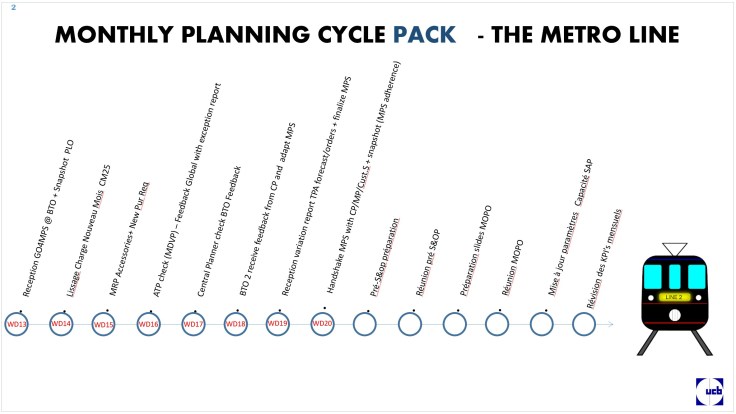
Search

TRANSITION MANAGEMENT IN SUPPLY CHAIN

(from STRATEGY to EXECUTION)

Author

ederyckel

#henrisalvador #francebresil 2025

DON’T PUT SOCKS ON THE HIPPOPOTAMUS……or you will screw up your Supply Chain !

By Bill Belt, CFPIM, Emmanuel de Ryckel, CIRM

30 Years for NOTHING?

Approaching Supply Chain Management in a humorous way is probably unusual, but how else could you avoid despair when you realize that still in 2010 all the development and improvements that were made is this area over the last 30 years, are so often ignored and by-passed. Nothing similar would ever be tolerated in other areas like Finance, Quality Control…

How can today manufacturing organizations still accept to have Supply Chains literally screwed up, thanks to the ignorance of basic Concepts, or worse by a lack of pragmatism or business intelligence, in the implementation of these principles in concrete and complex situations?

In this presentation, Emmanuel de Ryckel and Bill Belt will review the worst Supply Chain Management practices that they have encountered in the course of their careers, both as operational managers in Industry and as consultants.   Using a process of brainstorming in which the audience can participate, they will discuss Forecasting, Sales and Operations Planning, Load Smoothing, Outsourcing, Scheduling, Inventory Management, and IT tools.  By starting with what doesn’t work, they will highlight what does work and reveal the true principles of Supply Chain Management that bring real value to the company and to its customers by building lasting supply chains. 

The « Hippo attitude »

 EdR – Hi Bill, you may believe this is a stupid question, but did you ever try to put socks on a Hippopotamus?FRRREE

BB – Well, not recently, Emmanuel.   Why are you asking that?  And what about you, did you ever try??

EdR – Not really, but you may not know that I’ve spent hours and hours observing hippopotamuses in the bush, in various African countries, and I have tried to learn lessons from these observations. Hippos are in fact very strange animals. They are part of the “ruminant” family, and they look very peaceful. Because of this you may believe you can approach them, play with them, and maybe do some very funny things with them. But in the reality they are extremely dangerous and their reaction if you approach them is very brutal as they will charge you and kill you most of the time. Every year in the bush they make more victims than any other animal, even lions.

Victims most of the time were very clever people, tourists with sometimes high profiles, but nevertheless they were killed although they had been alerted to the risks and dangers, and trained how to behave in any situation.

More seriously, in my professional life, and you probably did the same, I have observed strange attitudes that I will call the “Hippo attitude” during this conference.

By this, I mean inappropriate behavior from very clever and well educated people, whether they are Supply Chain directors, Demand managers, Supply Planners…HIPPO ATTITUDE

BB – So Emmanuel, if I summarize before we really start our discussion, a “Hippo attitude” is the attitude of a manager who jeopardizes himself and his company by ignoring some very basic principles in Supply Chain Management.

EdR – Exactly, and these principles have demonstrated their effect all over the world.  Our goal today is to use a few real examples from our observations in industry, and to discover some of those “Hippo attitudes” and their remedy.

BB – So let’s start with our first question!

EdR – Yes, and the question is: How can you be 100% sure that every day, dozens of problems like material shortages, machine unavailability, unexpected customer demand… will blow up in your face each time they occur ?

BB – The answer is obvious: be sure to avoid anticipating your actions, forget about S&OP & MPS, whether you’re in a Lean Environment or in a more classical MRPII mode.

EdR – The problem with SCM is that like in the world of high fashion, things often change from one extreme to the other. Like one season very short dresses and the season after, very long ones. In Supply Chain Management MRP2, JIT, TOC, ERP, APS, LEAN…, have succeeded one another as the most popular fashions during the last 30 years.

These radical changes are often encouraged by consulting firms or system vendors trying to promote their so-called “innovation”, just by condemning other approaches. In fact, the success of Supply Chain Management comes from the appropriate utilization of the different techniques or systems according to the specificities of your environment.

As an example, I will always remember an experience I had in the factory of a subcontractor of one of the leaders in the automotive industry in France.

The first day of my mission the Supply Chain VP threatened to interrupt my consulting mission if I tried to introduce in his organization any MRPII principles, for the reason that his manufacturing sites were all working using synchronized flows and Lean concepts.

When I saw after this discussion how often the production lines were interrupted for parts shortages I couldn’t resist telling him that to be successful, his Supply Chain Strategy was missing 2 of the 3 key components:

  1. Direction: deploying strategy and monitoring the performance of the operational level of the supply chain
  2. Anticipation: expressing customer demand level by level throughout the supply chain
  3. Acceleration: removing waste from value streams to serve customers with shorter lead times and lower costs.LEANSCM

BB – I’ve seen that many times too, Emmanuel. Somehow the idea arose that if a company uses Kanban—which is a great tool to use, like the rest of Lean—then it doesn’t need to plan or to anticipate.  But if it doesn’t have a planning or anticipation system with MRP II, with a Master Production Schedule at the head, then it’s not going to be able to level its own production or to furnish suppliers with a levelled supplier schedule of purchasing requirements. In a supply chain after all, the customer is a supplier—of information to the upstream steps in the supply chain, whether it is pushing production and purchasing with work orders or pulling them with Kanbans.

EdRSecond Question: How could you be sure with an APS system, to create chaos in your Supply Chain? How could you be sure that any little problem like an equipment breakdown…will have disproportionate consequences??

BB – Nothing easier to achieve: make sure that the users of the APS only have a technical background on the computer software and no knowledge in Supply Chain Planning at all. Make sure also that you don’t have any formalized planning process to be sure there will be no distinction between short term scheduling and mid-term planning.

EdR – The real revolution that happened in the last 5 years didn’t come  from the Supply Chain Management techniques, but from the fantastic acceleration in the treatment of information. If you take the example of APS systems, they are real decision making accelerators, but they can easily became problem accelerators if the Technology is not strongly supported, FIRST by strong Processes (Master data, Demand Management, Supply management, Capacity Planning, Procurement Planning,…) and SECOND, by People  with an excellent background and practical experience  in Planning.MPS

I recently met a dramatic “Hippo attitude” during a mission in the process industry. A new manufacturing site was starting to plan its production activities using an APS System. The “go live” happened after an insufficient number of training hours, with almost no formalized planning processes except Shop Floor Scheduling,  and little understanding of basic Supply Chain Management at all levels in the organization.

The consequence of this situation was that the system quickly took the control of the operations, driving the plant to poor customer service and bad capacity utilization.

BB – I always recommend that before implementing any new system, companies invest more time to train their end users, key users and managers of all sectors, before formalizing their processes. Only after that, should come prototyping efforts on the system.

But this recommendation is often sacrificed on the hotel of short term profitability.MPS BIS

EdRThird Question – Let’s imagine that your plant is facing an accumulation of back orders to manufacture.

The production scheduling has been done for the next 4 weeks and all remaining orders have been placed outside the planning time fence waiting for the APS system to reschedule them.APS SMOOTHNING

How could you be absolutely sure, using an APS system to have ALL your customer orders LATE according to the initial customer requested date?

BB – May I suggest you that to achieve this dramatic result for your customers, you should just ignore the lessons of your S&OP, if you have one, and let the System systematically perform Finite Capacity Planning with “forward” smoothing of your workload.  If a component cannot be produced on time, for lack of capacity, finite capacity loading will push out its completion date until enough capacity is available. You may end up at a situation where all your orders have been rescheduled which is giving your workload graph a better profile, but with the perverse  effect that all orders have been pushed further out beyond the original customer requested date.plan time fence

Of course customer service will be terrible and nobody will survive in such a situation.

The problem with automatic rescheduling or “finite capacity loading” is that to do it correctly, you would have to run endless iterations until the system founds enough capacity for your orders. But no matter how clever the APS could be, it will never tell you what you should have seen beforehand at the S&OP level, how much available capacity you should have to satisfy your customer demand on time.

This is another example of what should never happen in your organization, the domination of your people and your processes by the system. 

EdR Fourth Question: What’s the other best way to always deliver your customer orders late, to destroy the efficiency of your machines and risk compromising the future of your manufacturing plant?

BB – The answer is easy: never identify your constraints, whether they are linked to your machines, materials, labor…, and of course ignore them when you are planning your deliveries to your customers.

Doing things this way you will be sure that the final output of your process will be erratic and frequently interrupted, since you didn’t took into account the demonstrated capacity of key resources.

EdR – I recently faced a situation where a plant was still deliberately planning the output of its packaging lines using the maximum theoretical capacity, even though they were sure that the lines will not be 100% occupied due to constant shortages of components.

Everybody knew there was a bottleneck upstream of the final operation but this was reflected in the planning.

BB – I would suggest that the solution is starting at the S&OP level that they should do at two levels, starting from the constraint. Only the demonstrated capacity of this bottleneck should give the rhythm of the following steps in the flow. Without this, the Plant will make commitments to Sales & Marketing but will never be able to meet them with the consequences that you can easily imagine.constraint

EdR – Would you agree if I say that the demonstrated capacity is “the average of actual production that the process has made in the recent past, projected into the future as the most reliable indicator of planned production”. And how would you use this concept in a manufacturing environment facing a constant increase of volume?

BB – If planned production must be increased or decreased, start with demonstrated capacity as a base; then you should add or subtract new volumes to this historical demonstrated capacity, based on real and realistic actions to be taken to change capacity on the shop floor.  The result is called planned capacity.MRP2

Starting to use the demonstrated capacity concept at the S&OP level is crucial as the right business decisions will then be propagated through the entire organization via the MPS, Procurement and Execution.

EdR – I have a last question: Imagine you are  “promoted” to Supply Chain Manager. In this situation, how could you be sure that after a few weeks you will become fully overloaded doing firefighting all over your plant, ineffective, and finally perfectly useless?

BB – Forget about the implementation of clear roles and responsibilities in the planning of your Supply Chain. Take care yourself of all the details yourself, from long-term planning to the follow-up of execution. And please, forget about one of the basic principles in Supply Chain management: “to each one his role, his horizon, his time bucket”:

EdR – I strongly believe in the proverb which says “if everybody sticks to his job the cows will be well taken care of”BOUCLES

A Director’s job is to give Direction. To insure that S&OP decisions are cascaded correctly through the entire organization, top management should verify that correct “relays” are implemented at both the ANTICIPATION and the ACCELERATION level as we saw at the beginning of this article.

No matter what job titles are given, the Supply Chain Director should hire strong leaders to take care of mid-term Planning (MPS Manager, Production Planner, Supply Planner, Procurement Planner…) and good technicians (Production Scheduler, Supplier scheduler, parts chaser…) for short term Scheduling and the control of the execution of the production programs.

BB  – In conclusion we hope that, this doesn’t sound like “rocket science” and that you are now convinced that  serenity  and results  that  serenity  and  in  your Supply Chain, will only come if you are capable of applying these basic principles of good SCM using your creativity and imagination to respond to changing circumstancesHAPPYHIPPODD


About the authors: 

Bill Belt, CFPIM

Founder and President of BILL BELT EXCELLENCE (BBX), Bill has worked for thirty years in industry both in the U.S. and in France,  including 14 years in various management positions, with Westvaco, IBM, Honeywell Bull and Essilor.

He has helped many companies reduce inventories, shorten lead times, reduce costs, raise customer service and increase productivity.

His references include Coca-Cola, Laboratoire Vetoquinol, Messier Bugatti, Alstom, Legrand, SNR Bearings, FCI Connectors, Techspace Aero, Danfoss, Bombardier, Norton, Novartis, Nadella, Amada, France Glaces Findus, Autocam, Alcan, Etienne Lacroix, Pfizer, and Dassault.

Emmanuel de Ryckel, CIRM.

With over twenty years of experience in industry and logistics, Emmanuel  worked for 14 years with Smithkline Beecham (in Belgium, France, China and Brazil) in the Supply Chain and Lean Manufacturing.

He was also Operations Director for the Measurement & Control Division for  Honeywell in France and Senior Consultant for Proconseil in France and Brazil.

Since 2002, Emmanuel has worked as an independent consultant and transition manager with dozens of companies to improve their Customer Service and Inventory Control via the construction of better Planning Processes, using SAP & APO.

His references include UCB Pharma, Schwartz Pharma, Laboratoires Servier, LFB (Laboratoire Français des Biotechnologies), Aventis Pasteur, GlaxoSmithKline.

2016 A MARVELOUS YEAR TO LIVE !!!

The current extraordinary economic crisis recalls Murphy’s famous Law: “Anything which can go wrong will go wrong.” It’s PESSIMISTIC, fatalistic, exactly what WE don’t need, what YOU don’t need right now: to darken everyone’s mood even more. In the US, nearly two-thirds think that the country is in decline, and this feeling has contaminated many other countries. In these conditions, what can we expect from 2016 ?

Fortunately, that “Law” is not what Captain Edward A. Murphy, an engineer in the U.S. Air Force, actually said. While working on speed tests using sleds in the 1950’s, he noted that two components were both mounted backwards and said: “Anything which isn’t specified, will be done wrong.”

He berated himself for not having thought of the backward possibility and not having specified the right way.

So, when things are specified correctly, they work! This is fundamentally OPTIMISTIC: we hold in our hands the power to make devices, processes, organizations and systems work correctly.

The current economic situation seems uncontrollable, and entire countries are going bankrupt. Many people and companies are caught up in the storm: products selling poorly, extended and costly supply chains, full of risks, complex, costly ERP systems and a financial vise locked in on cash and short-term objectives.

Facing this increasingly uncertain environment, many people give up and feel helpless. Murphy’s traditional Law runs free in that kind of environment. People spend their time correcting system errors, forecast errors, planning errors and all kinds of non-Quality.

Lean however is OPTIMISTIC: “Lean experience teaches us to enjoy and make the most of what goes wrong, encourages us to go to the gemba (the workplace) and learn to look for the real problems faced by workers, the real wants and needs of the customer”. This quote is from John Shook, CEO of the Lean Enterprise Institute. With Lean problems are considered positively as they are used to drive changes and progresses; that’s fundamentally OPTIMISTIC!

Contrast that with our traditional point of view: problems are bad, because they keep us from attaining our financial objectives. We can never solve them all, so we have to put them aside and keep producing. That’s fundamentally PESSIMISTIC.

On the contrary, Lean is encouraging optimism in our personal reaction to adversity. Instead of giving up, a confident person (or organization) examines the adversity—a problem encountered in the gemba—and by analyzing it (with a team), finds a solution and feels energized.

In fact, not only Lean, but all technologies for managing industry and the Supply Chain are OPTIMISTIC.

MRP 2 shows anticipated problems to planners, exactly like Lean, which shows current problems to operators in the cell.

The great danger would be to believe that overload and bottleneck problems can only be resolved by the computer, and to think that adopting «finite capacity» and advanced planning systems (APS/APO,..) are magic tools. Following this path would definitely be PESSIMISTIC as it will demonstrate that you are giving up on solving the problem yourselves but letting a System automatically postpone your customer Demand, what the anticipated detection and resolution of problems through the S&OP process would have avoided.

Sales and Operations Planning (sometimes called Demand & Operations Planning) is also optimistic, because it gives Top Management the means to prepare the future, to deploy its strategy, track historical performance and budget deviation.

If a company applies correctly Lean, MRP-2 and the S&OP, its Industrial and Supply Chain management will work well and…

2016 WILL BE ONE MARVELOUS YEAR TO LIVE !!! Murphy also would be happy to be understood at last, as “Anything which we can make go right, will finally go right.”

EMMANUEL DE RYCKEL (following an idea from Bill Belt  that I will never thanks enough from all what I have learned from him)

MANUCVBRAZIL 3

manu cv brazil 1

WHAT I LEARNED DURING MY MILITARY SERVICE AND THAT I CAN STILL APPLY IN MY DAY TO DAY MISSIONS: DRILL,DISCIPLINE &ESPRIT DE CORPS

ROCK ISLAND ARSENAL, Ill. (June 27, 2013) — Developed during the Revolutionary War, United States Army drill and ceremony is a necessary component of its legacy and future.

“The importance of drill and ceremony is rooted in tradition during the Revolutionary War from Baron von Stueben,” Staff Sgt. Gene Lucas, Chaplain’s office and Army Sustainment Command color guard. “The importance of drill and ceremony is the basic things, our lineage, and our forefathers that marched in World War II, but do the same things that we do now. It is about passing it along to the next generation and the generations to come.

” The winter of 1777-78 was a dark time for the Continental Army. Gen. George Washington chose to winter at Valley Forge, Pa. There was a lack of food, clothing and other basic supplies for the Army during this time. The training the Soldiers received at this point was haphazard and fragmented leading to issues with discipline and uneven performance against enemy forces.

Friedrich Wilhelm Augustus von Steuben, chiefly known in America as Baron von Steuben (1730-1794), was an officer in the Prussian Army from 1746-63 and a major general in the Continental Army from 1778-84. Baron von Steuben benefited from being part of a special cadre trained by Fredrick the Great of Prussia and serving as his aide-de-camp.

He received a letter of introduction from Benjamin Franklin and presented himself to Congress in Philadelphia. Shortly thereafter, he travelled to Valley Forge, Pa. and was assigned as the temporary inspector general by Washington.

Von Stueben saw that everything was lacking except for the morale of the army. Once his inspections were complete, he set about writing his Regulations for the Order and Discipline of the Troops of the United States, commonly known as the “Blue Book.” This manual was the foundation of discipline, drill and ceremony in the U.S. Army. This manual established the military training and maneuvers that helped the Army become the premier fighting force that it is today.

Teamwork is essential on the battlefield, and drill and ceremony is just one way Soldiers develop this skill,” said Ceaser Roberts Jr., Joint Manufacturing and Technology Center Sergeant Major.

“Drill and ceremony is all about military bearing and how you conduct yourself in a military manner,” Sgt. Mitchell Sta. Ana, material management non-commissioned officer for Rock Island Arsenal. “It dates back to the American Revolution War.”

“Drill and Ceremony has always been a part of the Army,” said Roberts. “It is a way for us to show honor and respect for someone ranging from heroic deeds to the burial of a military person who has passed away. Drill and ceremony is one of the first things Soldiers learn when they enter the military. It helps develop pride and confidence in their actions, learning professionalism and most importantly, it teaches them how to work as a team. As a senior leader, drill and ceremony is important to me, because it is and always will be a part of the military. It continues to honor the tradition of those that have come before us. It builds esprit de corps: a common spirit of comradeship, enthusiasm, and devotion. A lot of training goes into executing drill and ceremony. It bonds us together as on, so no matter who is giving the commands, we all understand how it is supposed to be carried out.”

“Conducting ceremonies does not get attached to discipline very often, but you must be disciplined in drill and ceremony,” said Sgt. 1st Class Jared Clapper, mobility NCO. “You do not want to be that person who is out of step or the one who misses a movement. You want to show the proper respect, namely, when you are holding those flags and strong upper body when dipping the flags and standing there.

“It helps when respecting those that came before us, and teaching the new Soldiers that are coming in, the proper way to respect the flag and ceremonies and why we do things the way we do,” said Clapper. “It gives them a chance to be a part of a ceremony instead of just sitting and watching. Going behind the scenes and working the ceremonies, understanding why they are marching up to the flag and the procedures of such events.”

“It allows us to keep up our traditions, show pride, respect, and honor, for example during a change of authority ceremony,” said Clapper. “It is symbolic of the outgoing sergeant major handing the guidon to the colonel and then the colonel passing it to the new sergeant major, that going of power, going of authority. It is very interesting to see. When flags are displayed, the Army flag is placed in the middle with the American flag on the right side higher than the other flags, in the place of honor. The Army flag is displayed with the first campaign streamer in the front, along with the latest or most current campaign streamer.”

In addition, the Blue Book places in writing the duties of non-commissioned officers. These updated guidelines are still in use today, in Field Manual 7-22.7, The Army Noncommissioned Officer Guide and Training Circular 3-21.5, Drill and Ceremonies. Sergeants of the U.S. military are members of the premier NCO corps in the world today. Many nations send their sergeants to American NCO academies to learn the way we train our sergeants, so they can go back to their militaries and attempt to establish their own NCO training programs.

“Drill and ceremony is great in showing your military bearing and professionalism and how well you take your profession,” said Sta. Ana. It is old as the military itself and the Blue Book gave us a basis to go off of,” said Clapper. “Drill and ceremony gets my Soldiers into the habit of thinking of their movements, maintaining their professionalism and how they carry themselves,” said Lucas. Drill and ceremony is not just facing movements and marching. The retreat ceremony at the end of each day is included in the manual.

“Throughout the work week you will hear Reveille and Retreat being played,” said Roberts. “This honors the American flag, daily, as it is raised and lowered on military bases. If you are outside and you hear reveille or retreat being played stop what you are doing and pay honor as well.”

The retreat ceremony has two parts. First, the bugle plays “Retreat”, after the firing of the cannon, the music changes to “To the Colors.” Once the song changes the American flag is lowered and this signals the end of the official duty day. All personnel driving on the Island should stop, exit their vehicles and render honor to the American flag, this including service members and civilians. The appropriate salute should be rendered when the song changes. These honors are another example of the legacy that binds the 21st century Army to its foundations in the Revolutionary War.

Les géants mondiaux de la pharmacie misent sur des patrons français

Le nouveau directeur général de Sanofi, Olivier Brandicourt, a fait toute sa carrière dans des groupes étrangers et atteint les plus hautes fonctions. Ce n’est pas un cas isolé, loin de là.

Le 2 avril, Olivier Brandicourt prendra la tête de Sanofi. Ce Français, qui dirigeait depuis dix-huit mois la division santé du groupe allemand Bayer, revient en quelque sorte au bercail après un quart de siècle de parcours professionnel à l’étranger. Sa trajectoire est comparable à celle de Pascal Soriot, directeur général d’AstraZeneca, huitième laboratoire mondial, de Christophe Weber, qui vient de prendre la tête de Takeda, numéro un japonais, ou encore d’Olivier Bohuon, qui dirige le fabricant britannique des prothèses Smith & Nephew.

Le point commun  de ces Français? Ils ont tous commencé très tôt leur parcours à l’étranger. Leur carrière passe par des études aux États-Unis, un premier poste dans un laboratoire étranger en France ou, plus souvent, un recrutement dans un autre pays. Jean-Pierre Garnier, ex-patron de GSK, a carrément joué sur les trois tableaux. Après avoir complété ses études de pharmacie par un MBA à l’université californienne de Stanford, il a démarré sa carrière dans la filiale suisse de l’américain Schering-Plough. Il a fini par devenir le patron du géant GSK, qu’il a créé lui-même en fusionnant SmithKline Beecham avec le britannique Glaxo Wellcome en 2000.

Le parcours de ces dirigeants devient parfois si international qu’ils en oublient leurs racines françaises. Pascal Soriot, devenu à 53 ans en 2012 patron du laboratoire britannique AstraZeneca, après avoir dirigé Genentec, filiale américaine de Roche, avait été embauché juste après ses études vétérinaires par le français Roussel-Uclaf (devenu par la suite Sanofi)… en Australie.  «Ma famille vit là-bas et j’y prendrai ma retraite. Je suis plus australien que français», a-t-il expliqué il y a quelques mois quand la rumeur voulait qu’il soit candidat à la tête de Sanofi.

Une affaire de génération

Olivier Brandicourt, qui a accepté de diriger le laboratoire tricolore, retrouvera donc la France après vingt-quatre ans d’absence. Ce Français né au Maroc a été jeune médecin en Afrique noire avant de rejoindre le groupe américain Parke-Davis, racheté plus tard par Pfizer. Il avait pris, il y a deux ans, la tête de la division santé de Bayer, à Düsseldorf. Mais son épouse vit à New York. Autre exemple, celui de Bernard Poussot, qui a commencé sa vie professionnelle au Maroc avant d’intégrer des laboratoires américains et de devenir le patron de Wyeth puis de négocier sa fusion avec le géant Pfizer en 2009.

«Ils ont souvent des compétences à la fois scientifiques et managériales, utiles pour la pharmacie» Patrick Biecheler, associé du cabinet Roland Berger

Mais le vrai point commun de ces Français champions de la pharmacie mondiale, c’est peut-être leur âge. «C’est un peu une affaire de génération, explique Patrick Biecheler, associé du cabinet Roland Berger. Il y a quelques décennies, les Américains étaient moins enclins à se frotter à l’international, notamment dans des contrées “exotiques” plutôt que de gravir les échelons dans leur entreprise aux États-Unis. Ce sont les non-Américains – et les Français – qui ont accepté les défis internationaux.» Le choix a été judicieux. «Être responsable d’une structure à l’étranger permet de connaître les grands patrons qui viennent visiter leurs filiales, ce qui n’est pas le cas lorsque l’on est cadre au siège d’un grand groupe», soulignent plusieurs chefs d’entreprise.

Autre avantage: débuter à l’étranger facilite la comparaison entre des cultures et des modes de fonctionnement différents. «Cela donne une ouverture d’esprit et une capacité à réagir de façon atypique. Cela peut être utile à la tête de sociétés où l’innovation technologique est capitale, comme dans le secteur de la santé», précise Stéphane Bancel. Actuel PDG de la biotech américaine Moderna, il a débuté au Japon chez BioMérieux. «Mon parcours international, mon expérience des grands marchés et des pays émergents ont compté pour arriver chez Smith & Nephew», confirme de son côté Olivier Bohuon.

«Le terreau français compte des laboratoires de taille intermédiaire, pendant longtemps tenus par les fondateurs ou un actionnariat familial. Cela a incité les cadres plus ambitieux à s’exporter»

Patrick Biecheler, associé du cabinet Roland Berger

Les Français sont appréciés aussi pour leur formation, de pharmacien (Jean-Pierre Garnier, Christophe Weber, Olivier Bohuon), de vétérinaire (Pascal Soriot), de médecin (Olivier Brandicourt) ou d’ingénieur. Un diplôme, dans la plupart des cas, complété par un cursus en management (HEC pour Pascal Soriot et Olivier Bohuon). «Ils ont souvent des compétences à la fois scientifiques et managériales, utiles pour la pharmacie», explique Patrick Biecheler.

«La France, comme les États-Unis ou la Grande-Bretagne, et dans une certaine mesure, l’Irlande où se trouve un vivier d’usines de médicaments, est un pays où la culture pharmaceutique est forte, ce qui contribue à la formation de patrons dans ce secteur», souligne Olivier Bohuon. Mais «le terreau français compte surtout des laboratoires de taille intermédiaire, pendant longtemps tenus par les fondateurs ou un actionnariat familial. Cela a incité les cadres plus ambitieux à s’exporter, y compris au sein de ces entreprises», ajoute Patrick Biecheler.

«Réfléchir dans une langue étrangère»

La langue n’est pas forcément un handicap. Olivier Brandicourt, recruté par Bayer en 2013, ne parle pas un mot d’allemand. Cela peut même être «un atout», souligne le consultant américain Roger Dooley, en pointant des études qui révèlent que l’on est «plus rationnel, plus à distance de l’émotion, quand on réfléchit dans une langue étrangère».

Ces Français n’ont pourtant pas créé un réseau entre eux. Christophe Weber, qui arrive chez Takeda, ne connaissait pas auparavant François-Xavier Roger, nommé directeur financier du groupe nippon en 2013. S’il est un réseau, ce serait plutôt celui des anciens de GSK: le groupe britannique qu’a dirigé Jean-Pierre Garnier a accueilli dans ses rangs Christophe Weber ou Olivier Bohuon. Mais aussi… le Germano-Canadien Chris Viehbacher, qui sortait de GSK quand il a pris la tête de Sanofi fin 2008 et qu’Olivier Brandicourt remplace aujourd’hui. (Le Figaro 23 Mars 2015)

HOW MUCH DOES BIG PHARMA SPEND ON R&D AND SALES/MARKETING

IMG_0252

STRATEGIE & TECHNIQUES DE MOBILISATION POUR LA RÉDUCTION DES CYCLES & DES STOCKS DANS L’INDUSTRIE PHARMACEUTIQUE

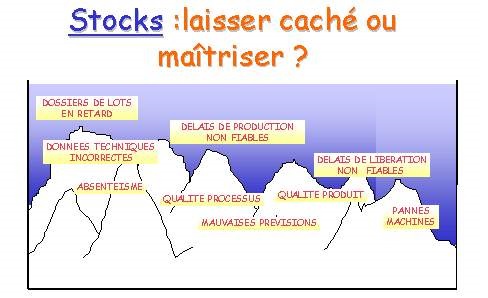
Comment parvenir à mobiliser toute une organisation afin de réduire ses cycles industriels et ses stocks, dans un environnement compétitif encore favorable ? Comment éviter d’avoir à affronter sans défense des objectifs souvent arbitraires de réduction de 20-30% et davantage ?

Deux acteurs du monde Pharmaceutique industriel, l’un géant et  l’autre plus modeste, par le biais d’une approche managériale transversale et d’un outil de décomposition des flux, ont fait face à ces défis.

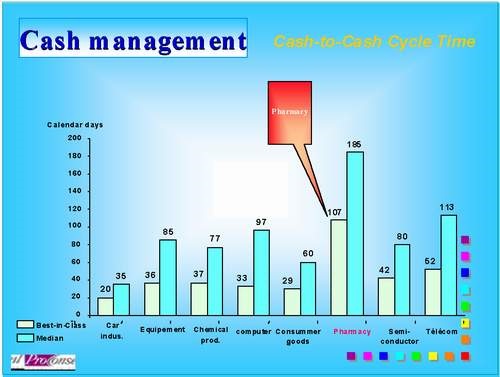
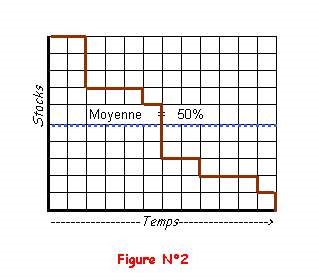
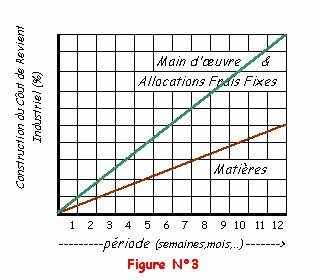
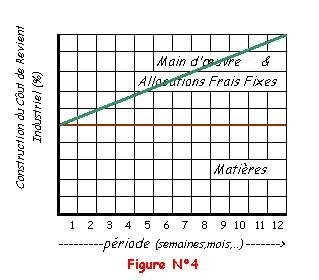
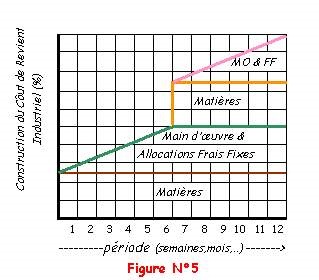
Lorsqu’une entreprise désire simultanément réduire ses temps d’opérations  et améliorer son «Working Capital» il est important pour elle de réaliser que toutes les activités et chacun des acteurs ou contributeurs dans un cycle ne possèdent pas le même poids. Le coût d’un produit (matières, main d’œuvre, allocations de frais fixes) ne se constitue en effet que progressivement tout au long de la Supply Chain. Des étapes de production, de contrôle, de stockage, … d’une durée comparable, en début de fabrication ou en fin de cycle induiront dans les livres comptables des niveaux d’immobilisations financières fort différents.

La première phase de l’analyse conduit à construire pour chacune des grandes  familles de produits son profil financier de stock, ce  qui fera apparaître  la prise de valeur plus ou moins rapide des produits durant leur temps de cycle.

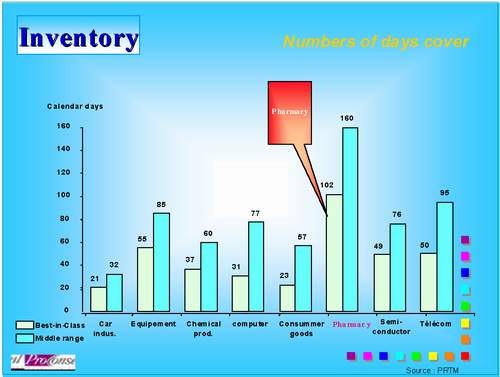
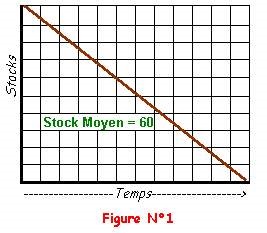
Relier le profil financier des stocks et la longueur de chacune des activités de la Supply Chain permet le calcul de la politique de stock, à savoir le niveau d’inventaire en valeur et en couverture que l’entreprise devrait détenir compte tenu du volume de ses ventes et de la longueur de ses lead-times démontrés.

L’examen  des stocks réels par famille détenus par l’entreprise comparés aux projections théoriques permet le diagnostic des excès potentiels. Ce diagnostic de l’existant conjugué à l’identification des plus grands contributeurs dans  l’allongement des délais, et à la mesure de l’impact de leur performance sur le niveau des stocks, donne aux équipes de management une quantification réaliste des objectifs de réduction qu’elles seront capables d’atteindre, ainsi qu’une liste des priorités d’actions à mener dans les différents secteurs (Production, Logistique, QA, QC…). Elles posséderont également une capacité de  simulation permanente de l’effet des changements réalisés sur le terrain, sur les temps de cycle et le Working Capital.

Se fixer des objectifs ambitieux comme ceux visés par l’un  des plus grands du secteur pharmaceutique, les atteindre et les maintenir durablement ne peut seulement reposer sur un outil d’analyse. La réussite passe par une volonté claire de la Direction de s’engager simultanément dans une démarche structurée de changement reposant avant toute chose sur la participation active des acteurs opérant sur les flux. Les changements opérés pourront mener jusqu’à une réorganisation de l’entreprise autour de ses principaux processus industriels.

Cette stratégie de mobilisation des équipes pour la réduction des cycles et des stocks fournit également une occasion unique de faire entrer dans l’entreprise les outils du «lean» dans le management des 0pérations et de la Supply Chain.

EMMANUEL de RYCKEL


Ficar “on top” para um interim manager e uma arte

Nas palavras de Cícero, amadurecer é coisa boa.

Dois mil anos depois, com fartura de números, o tema reaparece nas pesquisas iniciadas por R. Easterlin. Detecta-se uma “curva da fossa”: entre 40 e 50 anos, bate um pessimismo, uma insegurança difusa. Mas daí para a frente voltamos a ficar de bem com a vida, cada vez mais felizes — óbvio, só até o corpo fracassar. Será?

Esse lado emocional-filosófico é nebuloso. Amadurecemos com a idade, como sugerem as pesquisas? Ou acumulamos azedumes e rabugices? Ficamos cada vez mais impacientes com a burrice humana? Ou mais bem blindados contra ela? Cada um é cada um.

Exploremos alguns temas em que o terreno parece menos pantanoso.

O psicólogo A. Maslow documentou o que significava para ele ir ficando velho. Percebia uma perda progressiva da motivação para fazer as coisas e lidar com desafios. Mais e mais empreitadas deixavam de valer a pena. É o meu caso: já trabalhei no governo, mas hoje nenhum cargo me tentaria.

Sinto engulho só de vislumbrar o pesadelo da burocracia pública.

Em sua última entrevista, Paulo Freire segue caminho paralelo a Maslow, afirmando que envelhecer é perder a curiosidade. Se ele tem razão, no meu caso, permaneço jovem, pois minha curiosidade sobrevive, onívora.

O ocaso das faculdades mentais é bem documentado pela pesquisa. Degrada-se a memória, sobretudo a de curto prazo e a dos nomes e datas.

O raciocínio matemático começa a derrapar já a partir dos 30. De fato, todos os avanços na área foram feitos por jovens.

A boa notícia é que a capacidade de julgamento, a sabedoria, o esprit de finesse, mencionado por Pascal, não apenas sobrevivem, mas progridem.

Comprovou-se que os velhos precisam ler menos para decidir sobre algum assunto, com igual competência. E, nas humanidades, amadurecemos com os anos, e muito. Romancistas e historiadores?

Prefiram os velhos. Aleluia! Com o passar dos anos, políticos entendem melhor a natureza humana, por isso sobrevivem na carreira.

Sabemos também que a inteligência reage como um músculo. A qualquer idade, é fortalecida com exercícios e evapora com a inação. Daí a importância de exercitar a ambos. Se encolhem os desafios mentais na aposentadoria, risco à vida!

Não é o contracheque que salva vidas; mas a letargia intelectual mata. Se ficarmos esperando pela morte, ela virá mais célere. Com medo de morrer, continuo trabalhando, freneticamente.

Na minha incauta opinião, conversa de doença não faz bem à saúde. Tampouco é uma boa receita para a longevidade voltar aos lugares em que se viveu ou trabalhou, não encontrar mais conhecidos e ser tratado como um estranho.

Caminhando pelas ruas, vemos logo quem tem jeito de aposentado. Falta chispa nos olhos e o andar sugere que não quer chegar a parte alguma. Quem lê obituário, para ficar sabendo dos amigos que morreram, mostra na cara sua vocação para a morte. Cruz-credo! Aliás, a solidão é fatal! Por isso, vale o conselho de Samuel Johnson: enquanto jovem, é preciso cultivar os amigos, pois com a idade vai ficando difícil renovar o plantel.

A decadência do corpo é inexorável. Mais dias de indisposição, dói aqui, dói acolá, mais enguiços e reparos, mais remedinhos para isso ou para aquilo.

Contudo, avanços na medicina e melhores estilos de vida freiam spetacularmente a degradação do corpo. Mantêm serelepes muitos velhos que, faz poucas décadas,

estariam derrubados. Vejam nas ilustrações antigas a imagem dos avós, circunspectos e encarquilhados. Gente nas mesmas idades está hoje malhando nas academias, subindo montanhas e gabando-se de suas proezas, em todos os azimutes. Obviamente, isso dá trabalho: há que buscar remédios miraculosos, próteses, mandar recauchutar o coração, fazer dietas e exercícios árduos para manter a massa muscular.

No meu modesto julgamento, compensa.

Isso são teorias.

O único ganho indisputável é não ter de entrar em filas. Outro dia, estava no banco e, como a fila dos velhos não andava, um jovem me ofereceu seu lugar na outra. Relutei, mas acabei aceitando.

Feita a transação, saí correndo, para que ele não me visse partir na minha moto BMW 650 GS.

“Envelhecer é uma arte?” por Claudio de Moura Castro- Revista VEJA 14 Janeiro 2015

Blog at WordPress.com.

Up ↑