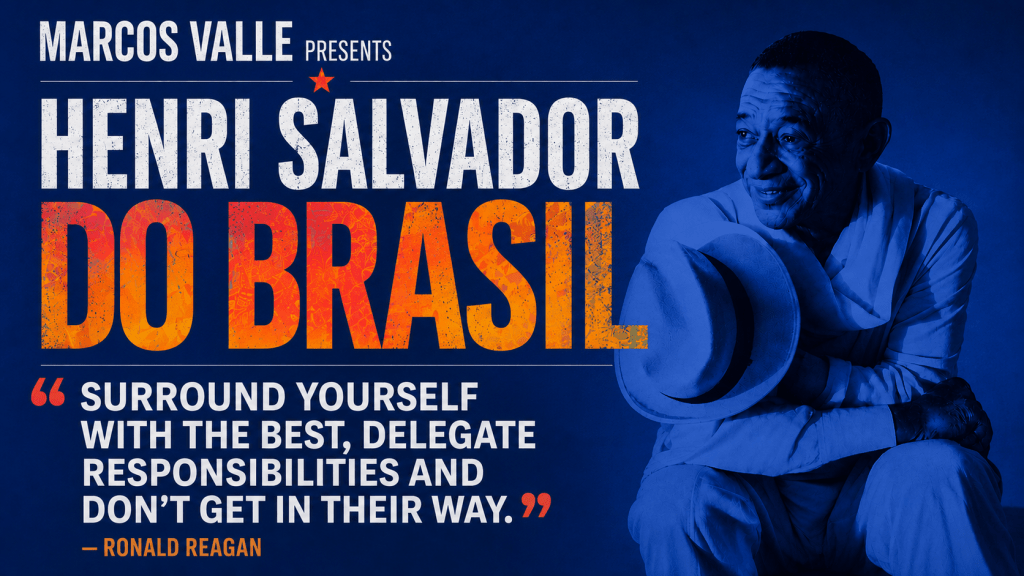
One quote, often attributed to Ronald Reagan, has stayed with me throughout my career:
“Surround yourself with the best people you can find, delegate authority, and don’t interfere.”
For years, I admired the simplicity of that idea.
Recently, while producing the album Henri Salvador do Brasil, I had the opportunity to live it.
When I invited Brazilian music legend Marcos Valle to become the musical director of the project, one question immediately came to mind.
What legitimacy did I have to tell one of Brazil’s greatest musicians which arrangements to write, which studio to use, or which musicians to hire?
None.
And that was precisely the point.
So I made a conscious decision.
I gave him complete creative freedom.
He chose the recording studios.
He selected every musician.
He made every artistic decision.
Why?
Because he knew which studio in Rio would make the strings sound richer, where the brass section would come alive, and where a piano could reveal its full character.
More importantly, he chose musicians he had played with for decades.
Their connection wasn’t something you could rehearse.
It reminded me of a great soccer team. The pass is made before the run even starts, because every player already knows where the other will be.
That level of trust creates something incredibly valuable:
Creativity.
I still remember the very first song we completed together.
To me, it sounded finished.
Then Marcos came back with a suggestion.
“Emmanuel, I’d like to add an accordion. What do you think?”
I smiled and replied,
“As long as it doesn’t end up sounding like a Parisian street accordion…”
A couple of hours later, I heard the new version.
It was magnificent.
The accordion added warmth, emotion and elegance—exactly what the song needed.
At that moment, I realized something important.
Leadership isn’t about being the smartest person in the room.
It’s about recognizing when someone else knows more than you do.
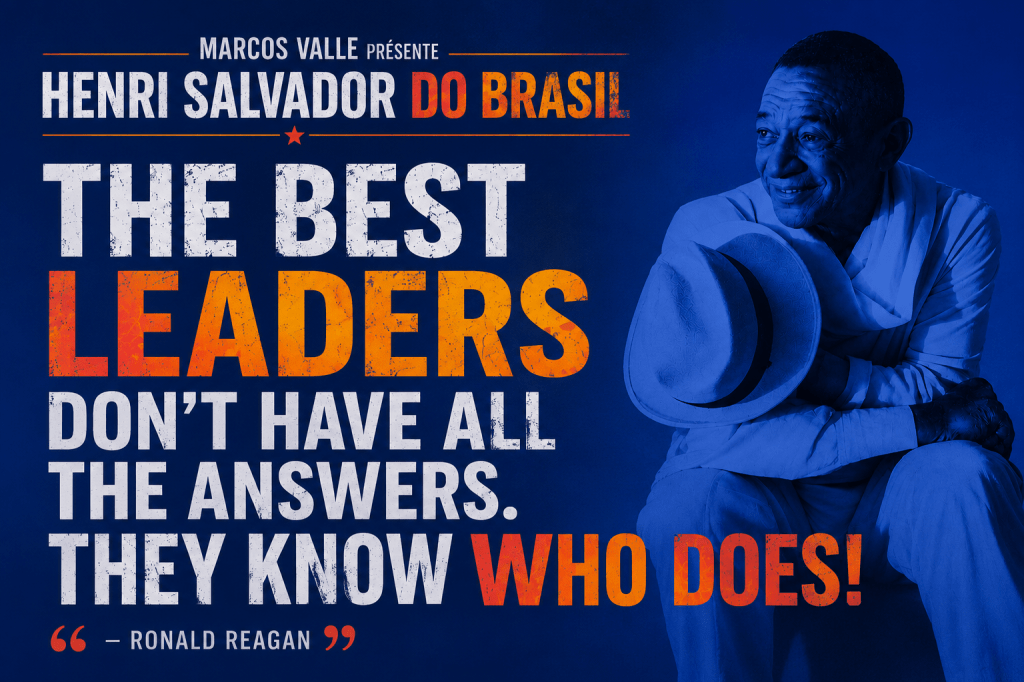
The best leaders don’t have all the answers. They know who does!
I’ve seen this lesson far beyond the music industry.
I learned it as a young military officer.
Rank gives you authority.
It doesn’t earn you trust.
Trust comes from competence, humility, consistency, and leading by example.
I discovered the very same principle years later in industry.
The highest-performing teams are rarely those where the manager controls every decision.
They’re the ones where talented people feel trusted, respected and empowered to do their best work.
Looking back, I think the role of a producer is often misunderstood.
People imagine someone who finances a project.
Someone who coordinates.
Someone who makes every decision.
In reality, the best producer may simply be the one who knows when to step back.
The one who brings exceptional people together around a shared vision.
The one who creates an environment where excellence can flourish.
Producing an album.
Leading a military unit.
Managing a global supply chain organization.
In the end, they’re all variations of the same job.
Leadership isn’t about proving you’re the most talented person in the room.
It’s about helping others become the very best version of themselves.
Because true leadership isn’t about playing every instrument.
It’s about bringing together the finest musicians, sharing a vision, trusting them completely… and then letting them make the music.
When everyone plays their part brilliantly, the conductor almost disappears.
Yet without the conductor, the orchestra would never have become a symphony.
The greatest achievements rarely come from one extraordinary individual. They come from an extraordinary team that someone had the wisdom—and the courage—to trust.
Emmanuel de Ryckel
#leadership #henrisalvador #marcos Valle


Leave a Reply